MSNVA has partnered with Breakthrough T1D to provide
up to date resources for patients and their families

Symptoms

Warning signs of new-onset type 1 diabetes (T1D) often appear suddenly and require immediate attention. The most common symptoms of type 1 diabetes are:

  • Extreme thirst (polydipsia)
  • Frequent urination (polyuria)
  • Unexplained weight loss

  • Fatigue
  • Dry mouth and itchy skin

Less Common Symptoms

These symptoms are not as common in new-onset T1D, but should be discussed with your doctor:

  • Fruity odor on the breath – It can also be a symptom of diabetic ketoacidosis (DKA), a medical emergency that must be treated immediately.
  • Vision changes
  • Increased appetite
  • Irritability and mood swings
  • Slow healing cuts
  • Yeast infections
T1D Diagnostic Stats

Risk Factors

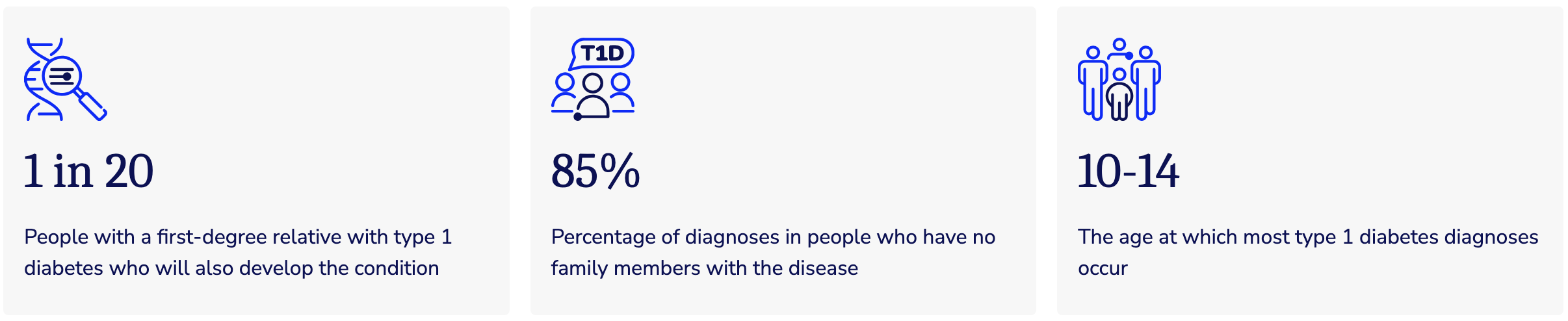
Certain genes increase the likelihood of an individual developing T1D, as can a family history of the condition. If you have an immediate family member with type 1 diabetes, your chances of developing the condition are 1 in 20, which is 15 times higher than the general population
Environmental factors, including viruses, are another factor behind T1D onset. Some researchers believe that certain viruses may specifically target beta cells, and as the body’s immune response tries to combat these viruses, it may mistakenly attack and damage the beta cells.
Once T1D is triggered, the body starts attacking the beta cells that produce insulin. This attack can be detected through biochemical signs called autoantibodies, which appear well before any symptoms of type 1 diabetes are observed.
As the immune system continues to attack and destroy more beta cells, insulin production decreases, leading to abnormal blood-sugar levels. Eventually, the number of destroyed beta cells becomes so high, and insulin production drops so low, that symptoms start to appear.

T1D Cannot Be Prevented Through Diet or Exercise
T1D is not caused by diet. Similarly, the risk of a type 1 diabetes diagnosis is not influenced by factors such as lifestyle, activity level, or socioeconomic status.
Tests to Diagnose Type 1 Diabetes:

Random Blood-Glucose Test

The quickest option to identify high blood sugar, which is associated with T1D, is a random glucose test. This test simply measures a patient’s current blood sugar. This is often the first test done to diagnose type 1 diabetes.

Glycated Hemoglobin (HbA1c) Test

The hemoglobin A1c test shows the average blood-sugar level for the past two to three months.

Ketone Test

Elevated ketones in the urine or blood indicate the body is not making enough insulin and is breaking down fat for energy.

Autoantibody Test

To confirm the diagnosis, a type 1 diabetes autoantibodies test is ordered. Autoantibody testing is used to accurately classify the diabetes stage and type.

For Parents

Just Diagnosed with T1D

Managing Blood Sugar

Time in range
Time in range is how long your blood sugar stays in your target range throughout the day. Most people with diabetes aim for 70% time in range, or between 16 and 17 hours out of 24.

High and Low Blood Sugar

Blood sugar levels change often during the day. You’ll need to notice if your blood sugar drops too low (hypoglycemia) and be prepared to treat it right away.

If your blood sugar is very high and your insulin is low, you can develop diabetic ketoacidosis (DKA). DKA is a serious complication of diabetes that can be life-threatening. You’ll need medical care immediately if you develop DKA.

Your health care team will let you know how to spot and treat high and low blood sugar and related health problems. Be sure to get in touch with your doctor or diabetes educator if you have any questions.

Treatment of Low Blood Sugar (Hypoglycemia)

If your young child has type 1 diabetes, you’ll handle daily diabetes care, such as giving insulin injections and watching for and treating hypoglycemia (low blood sugar). You’ll also need to stay in close contact with your child’s health care team. They will help you understand the treatment plan and how to help your child stay healthy.

Breakthrough T1D Bag of Hope

The Breakthrough T1D Bag of Hope™ is filled with resources and support for children with type 1 diabetes and their caregivers.

Request A Bag of Hope Here

For Teens

How to Make the Leap From Type 1 Teen to Adult

It’s only natural that teens on their way to becoming adults want more independence and control. But more control over their lives can often mean less control of their diabetes. No curfew, no comments on what they’re eating, no one else setting their schedule.

Driving and Diabetes

Having diabetes does not mean you cannot drive a car, but some extra steps are needed to make sure you are driving safely!

How can diabetes affect my driving?
• Treatment with insulin and some oral anti-diabetes medications may cause low blood sugars leading to sleepiness, dizziness, confusion, blurry vision, loss of consciousness, or seizures.
• Having low blood sugar while driving is like driving drunk and can lead to serious injury to you or others.
o Avoiding low blood sugars is key to making sure you and those around you are safe while driving.
• Other complications of diabetes such as being unable to recognize when your blood sugar is low (hypoglycemia unawareness), loss of vision (retinopathy), or loss of feeling in your hands or feet due to nerve damage (neuropathy) may also impact your ability to drive.

Click here for more info!

Menstruation Can Be Challenging

It will take time to determine a relatively consistent impact of your daughter’s menstrual cycle on her insulin needs and blood-glucose levels. It isn’t the same in every person. For example, some women notice insulin resistance during the days right before menstruation, while others notice it strike on the day they start bleeding. Some women say that resistance only lasts for 24 hours while others might experience three or four days of needing more insulin. Encourage your daughter to take good notes and be patient as you try to establish a somewhat predictable adjustment plan.

Establish T1D Management Expectations

It’s fair to establish expectations and guidelines with your teenager around their diabetes management. If they’re struggling, though, remember that the constant work of T1D is a lot to ask of anyone at any age. Even adults struggle with T1D. Even adults forget to bolus sometimes or miscalculate the carbs in a meal. You can’t expect perfection from your child. Build their confidence and skills by helping them positively navigate those rougher moments without guilt or shame.

T1D and Committed Relationships

Click here for more info!

Openness, honesty, and trust are key to successful relationships—especially with T1D. Letting your partner support your T1D can bring you closer together.

If you’re on a first date, it might feel daunting to share your type 1 diabetes (T1D) diagnosis. Some people choose to wait, others share it quickly. Just make sure you’re not sacrificing your health to hide it. If this person is truly a potential partner, they’ll need to embrace all of you, including your T1D!

For Adults

Living with T1D

With the right tools and support, T1D patients can do anything at any stage. Whether  newly diagnosed with type 1 diabetes, are helping a loved one, or have been managing your condition for a while.

Finding a Balance

No matter how T1D has manifested, patients can find success by balancing medications and sticking to daily exercise routine and nutrition planning.

Understanding Diabetes and Mental Health

Diabetes takes a toll on more than your body. It’s normal to feel emotional strain—and it’s important to ask for help.
Find a Mental Health Provider

Choose your Approach

Endocrinologists differ in their approaches to T1D. Choose the clinic that best suits your own needs and style.

For example, some favor frequent use of diabetes technologies such as insulin pumps and CGM devices, whereas others favor more traditional approaches such as using insulin injections. Some endocrinologists will make most insulin dosage adjustments at clinic visits only, whereas others aim to teach you how to make insulin dosage adjustments on your own between visits.

Before choosing a doctor, see if you can talk with them by phone or email to get an idea of their approach to diabetes. Some good questions to ask include:

  • How many patients in their care have type 1 diabetes versus type 2 diabetes?
  • What percentage of their patients use pumps, automated insulin delivery systems, and CGM devices?
  • Does the clinic have the ability to download glucose meter, insulin pump, and CGM data to review at clinic visits?
  • How easy is it to get in touch with the diabetes team between visits? Can you send blood-glucose levels to the team (by email, fax, or uploading) for review between visits?
  • Do they offer educational classes?

Find your Community

Find local support here!

Connect with people from all over the world who are managing T1D in their own way.

Attend in-person and virtual events in English or Spanish and learn about T1D topics that matter most to you!

Find a local Physician here!
DISCLAIMER: This material is for informational purposes. It is not intended as medical advice or as a substitute for the medical advice of a physician. Patients are advised to consult their physician for a treatment plan based on their medical history. 

Announcing: The MSNVA Foundation T1D Camp
Target Inaugural Camp: Summer 2028

Inspired by the nationally recognized Camp Sweeney in Gainesville, Texas — one of the longest-running T1D camps in the United States – The MSNVAF will develop a residential summer camp for children (6-18) with Type 1 diabetes in Northern Virginia. The camp will replicate Camp Sweeney’s evidence-based four-pillar model, adapted for our community.

Normalization- Diabetes management skills — meal planning, blood sugar monitoring, insulin regulation — become a normal part of daily life. Campers learn to independently manage their T1D with confidence. 

Confidence- Campers are empowered to achieve goals in sports, academics, art, and more. Every camper is given opportunities to succeed, building self-worth and strength to make healthy lifestyle choices. 

Virtue- Campers select a shared “Code of Living Traits” each session — 10 characteristics that bring the camp together under a common goal of virtuous living and meaningful connection. 

Service- Campers engage in small, helpful acts for one another, building deep friendships among peers who share the lived experience of T1D. These friendships extend far beyond the camp. 

The MSNVAF T1D Summer Camp will offer a full slate of recreational, creative, and competitive activities designed to demonstrate to every camper that T1D does not define or limit what they can do.


Activities List (sample)

  • Sports & Athletics: Archery, baseball, basketball, cross country, field games, football, frisbee golf, ultimate frisbee, lacrosse, soccer, tennis, swimming 
  • Outdoor Adventure: Boating & canoeing, fishing, hiking, challenge course, rock climbing, mini golf, rocketry, skate park 
  • Arts & Creative Expression: Arts and crafts, choir, music, theater, dance, tumbling, cooking 
  • Wellness & Fitness: Fitness programming, diabetes management workshops integrated into daily routines 
Pillar I - Normalization
Camper Outcome
Campers leave camp with the tools and habits to manage their condition as a natural part of who they are, not a barrier to living fully. 
Pillar II - Confidence
Camper Outcome
Campers discover that T1D does not limit their potential — and return home with renewed determination to pursue their goals. 
Pillar III - Virtue
Camper Outcome

Camp becomes a values-formation environment where character is built alongside diabetes management skills. 

Pillar IV - Service
Camper Outcome
Campers develop a lifelong support network of peers who understand their journey, reducing the isolation that often
accompanies a T1D diagnosis.
 
If you are a parent of child/children with T1D, we would love to hear from you, as we develop the MSNVAF-T1D Camp.  Please send your feedback on the adherent form.
Our plan of action incudes:
  • Launching a fundraising effort to defer cost for parents.
  • Create a scholarship fund for T1D children in need.
  • Finding a partner site for the MSNVAF-T1D Camp – includes exploring partnerships with the area’s top private schools.
Partnerships & Giving Opportunities

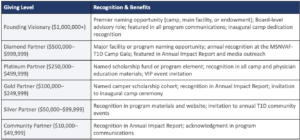
We invite foundations, corporations, government agencies, and individual donors to join us as founding partners of the MSNVA-T1D Camp Initiative.

The following giving levels provide recognition and naming opportunities commensurate with investment: 

MSNVAFCampGiving

Parents' Feedback