
Do Not Raise the MedMal Cap
The data shows that a $6M cap would hurt Virginia physicians and patients.
Virginia Medical Malpractice Damage Cap Analysis
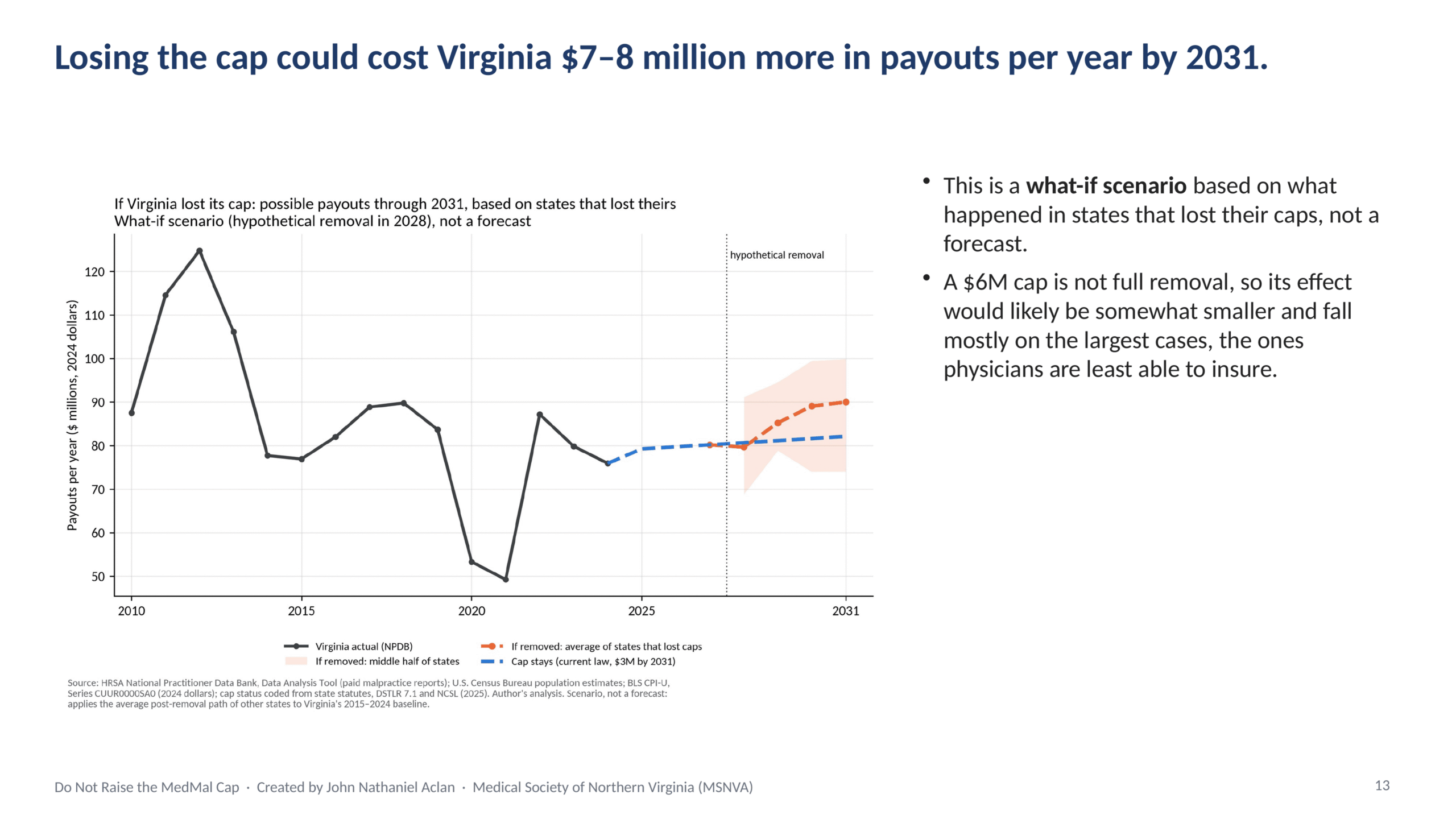
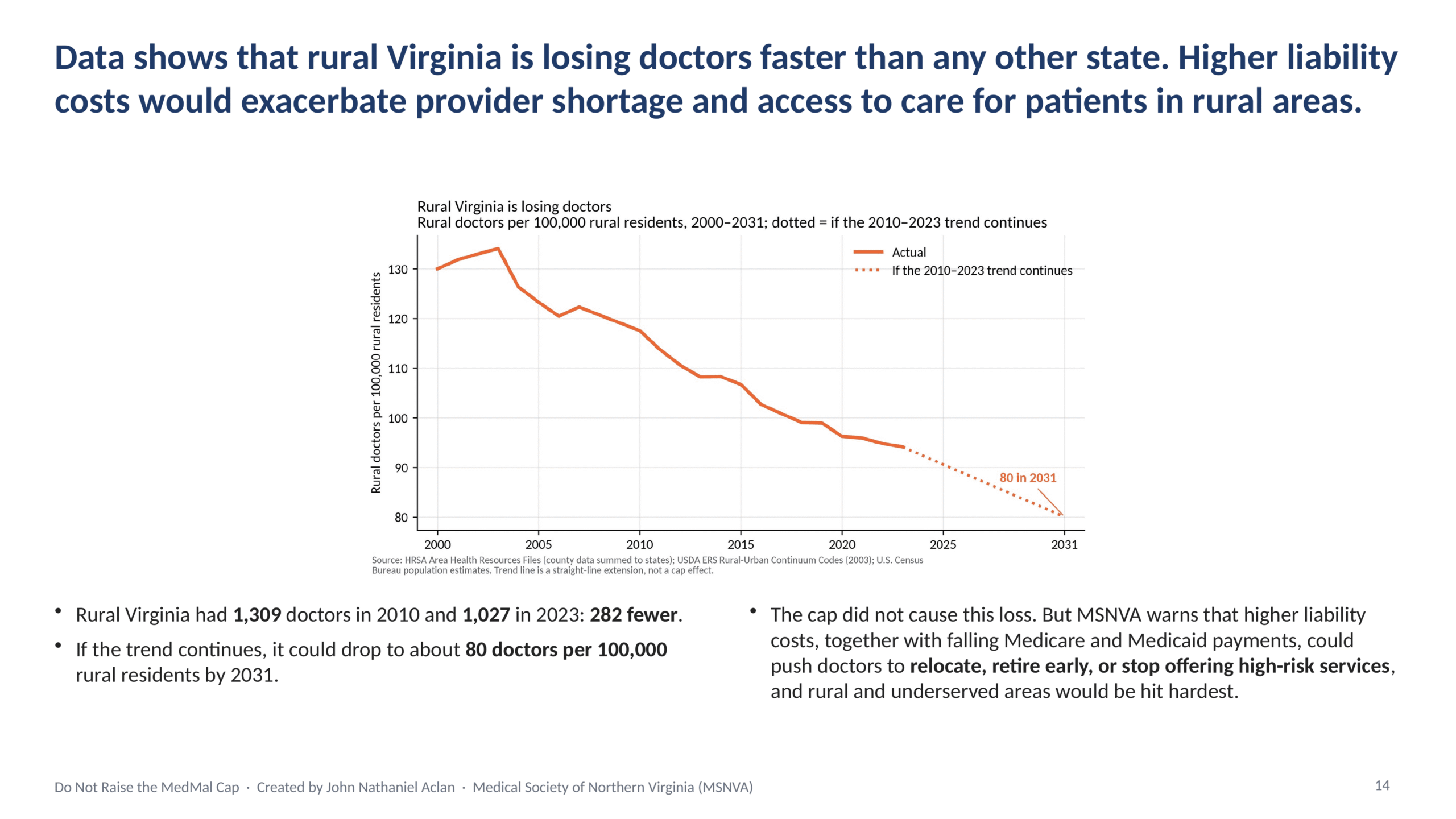
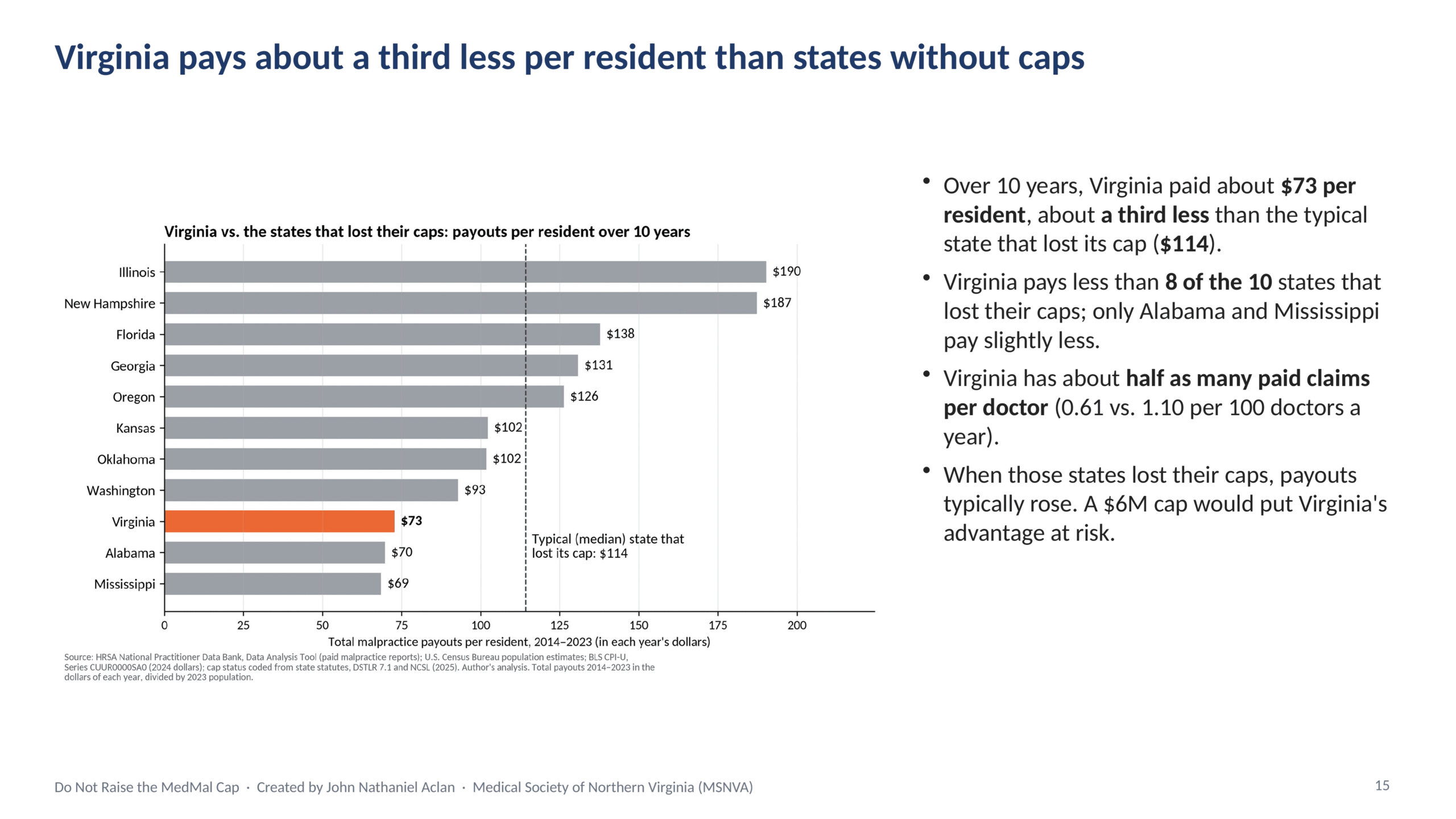
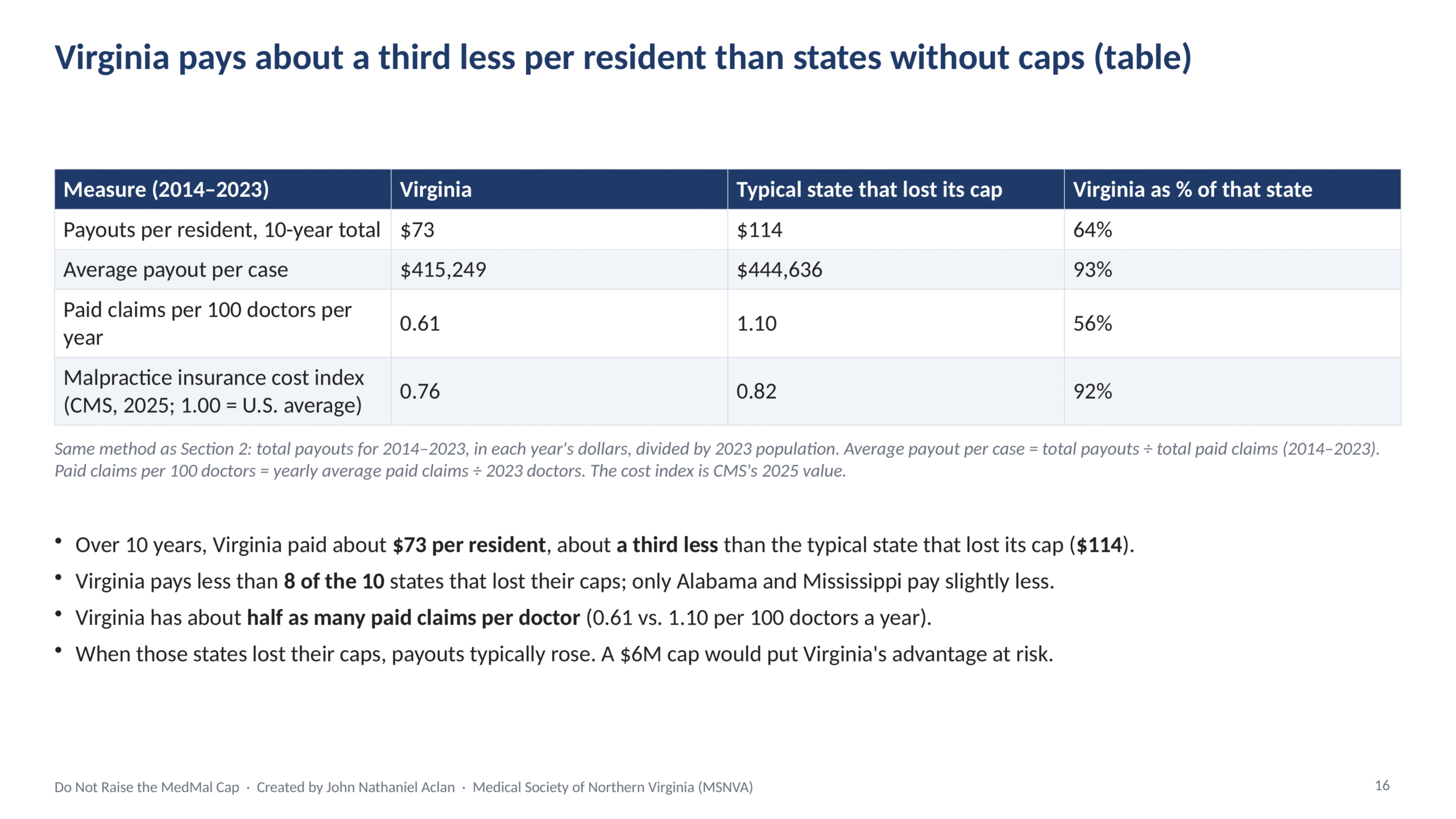
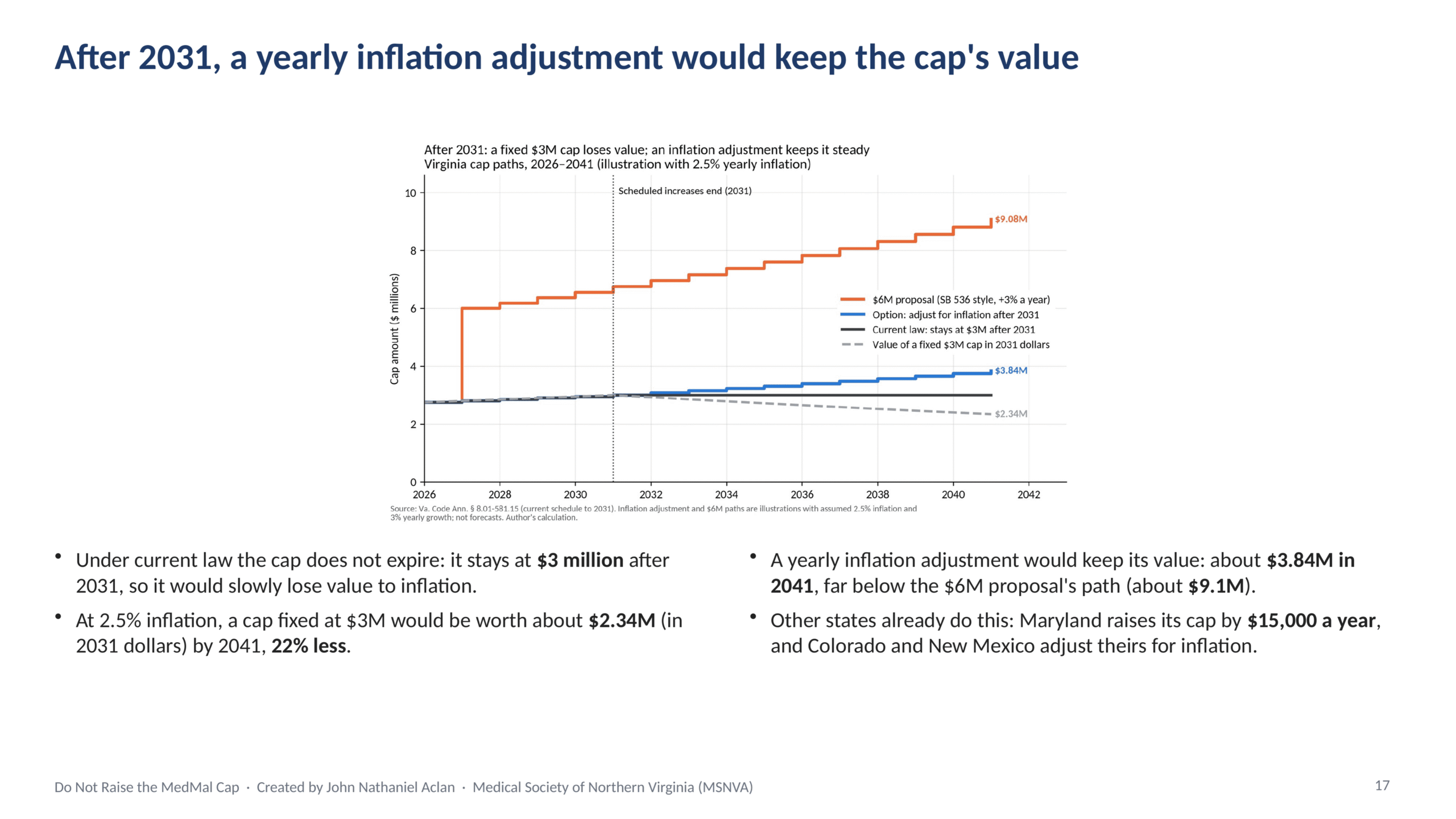
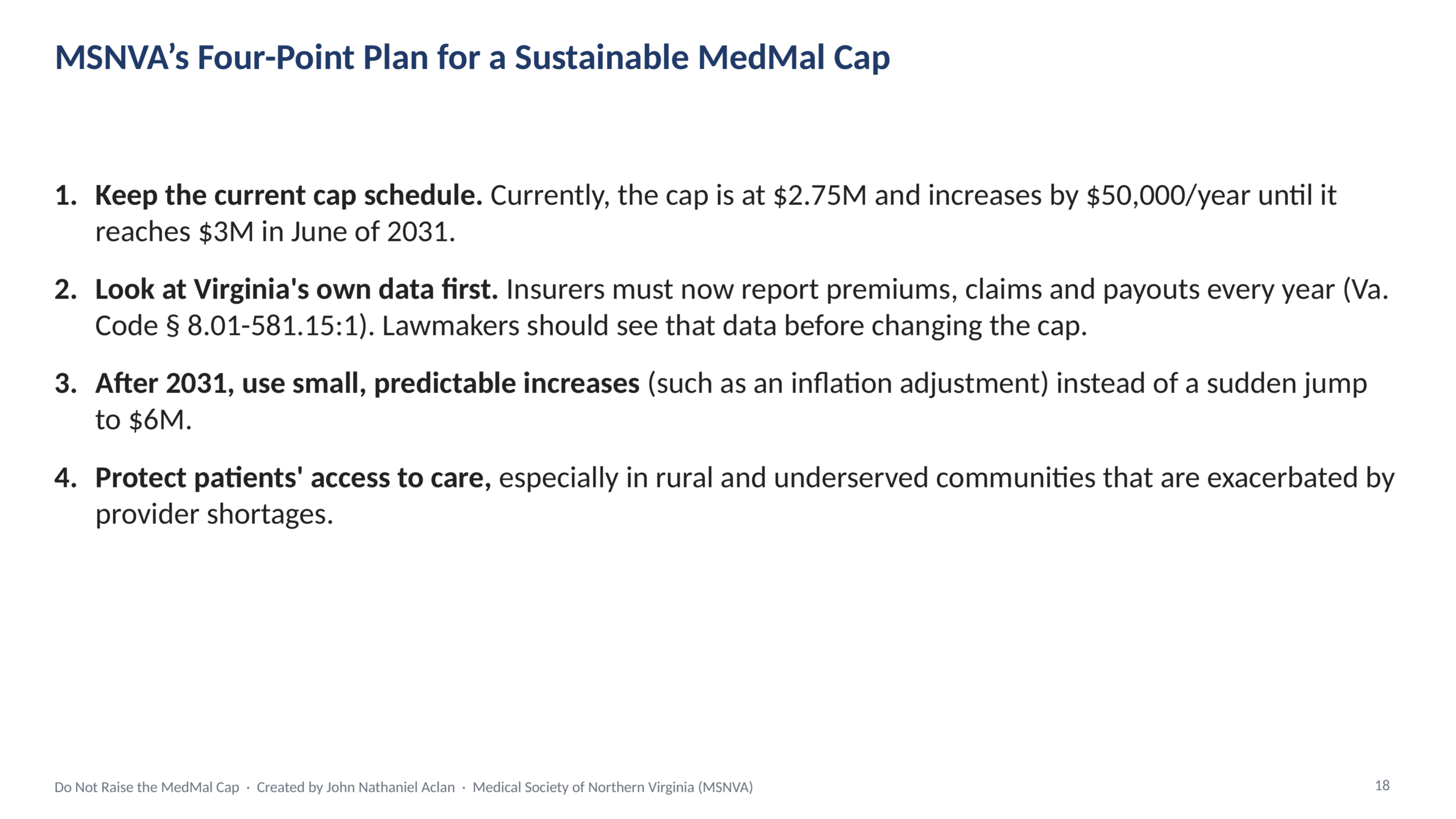
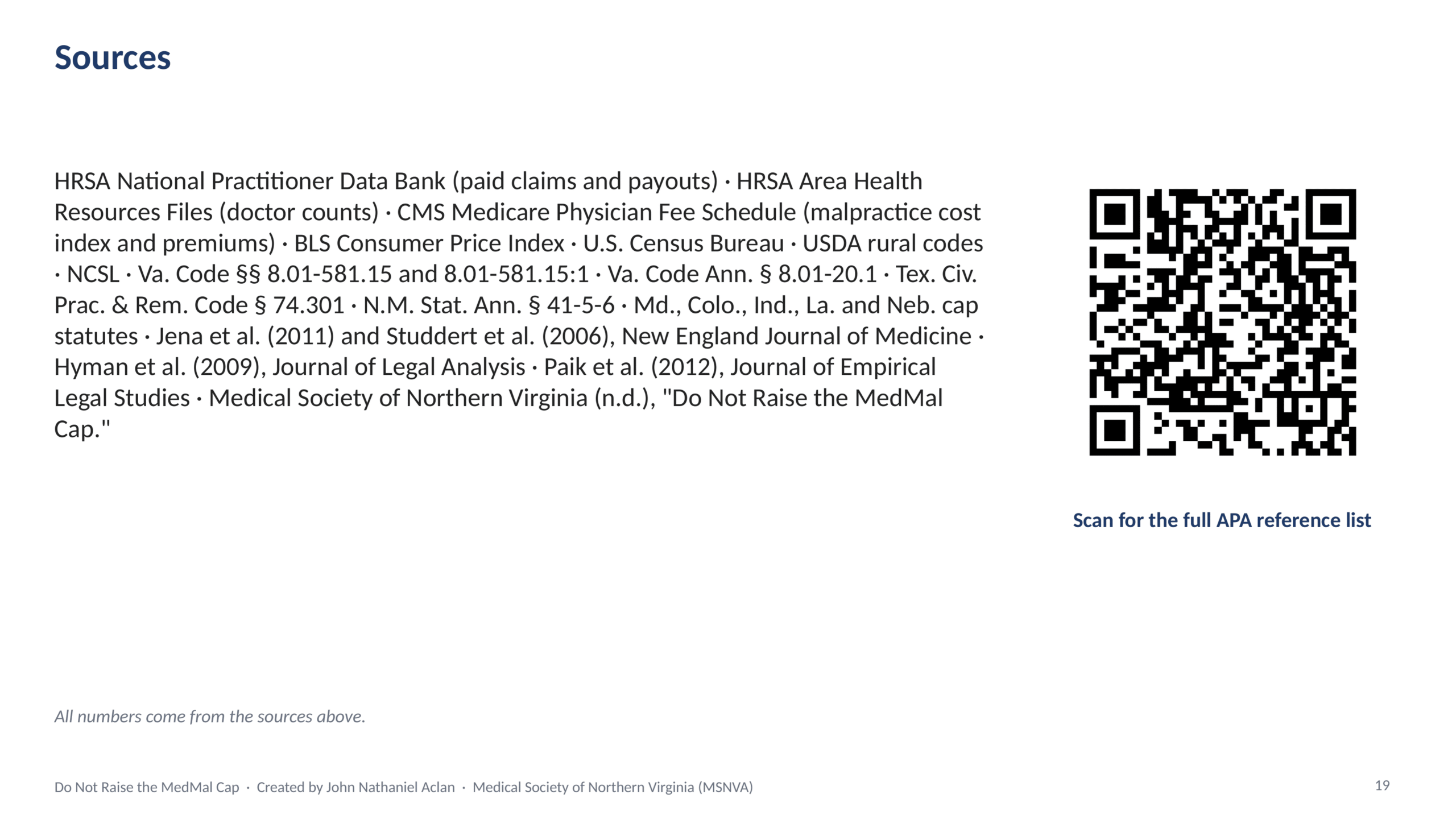
Swipe or scroll sideways to see all 19 slides. Click a slide to open it full size.
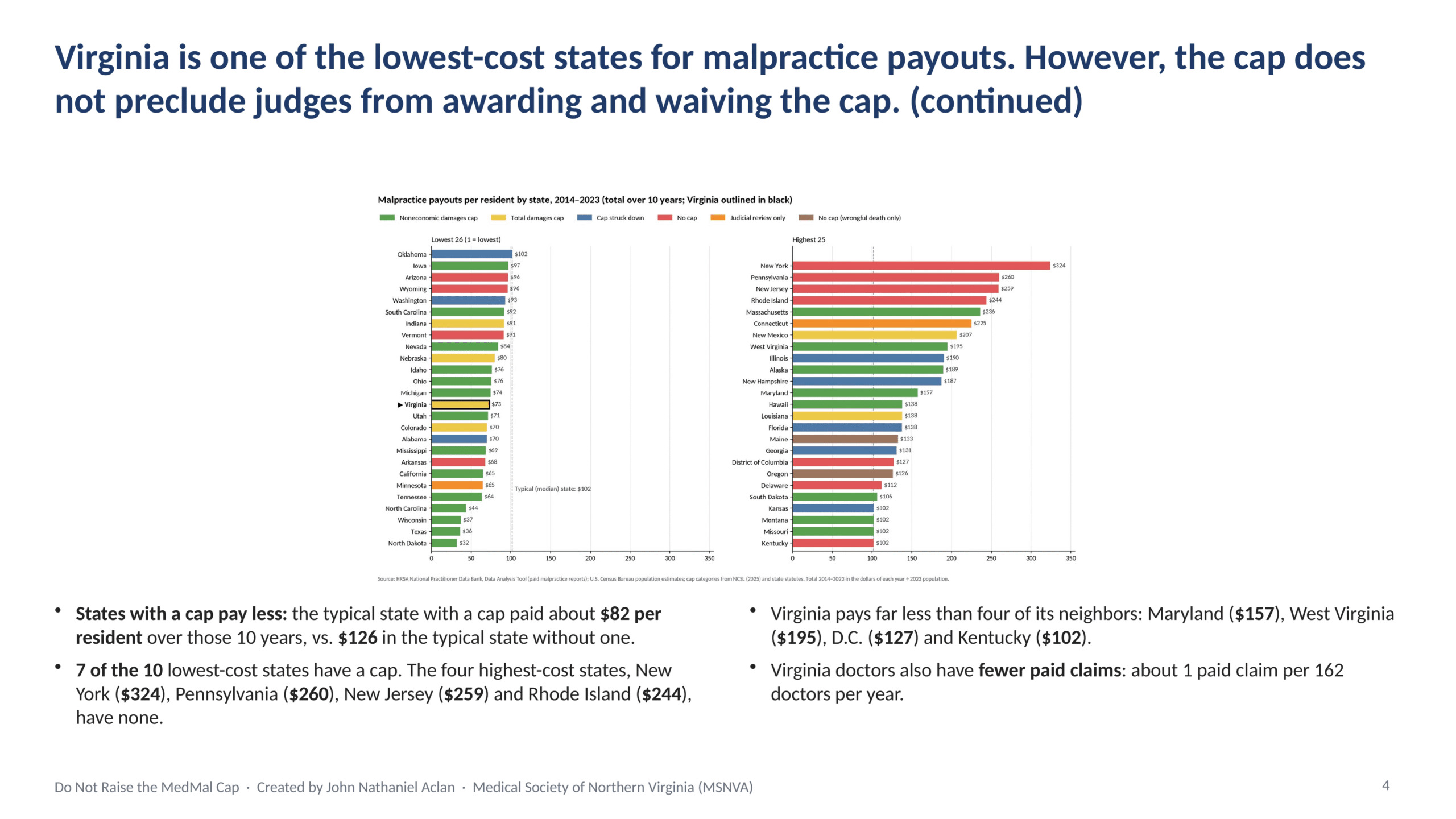
This presentation analyzes Virginia’s medical malpractice damage cap, comparing state malpractice payouts, physician insurance costs, and potential impacts on healthcare access.
Data Sources & Credits: HRSA NPDB | CMS | U.S. Census Bureau | NCSL | Virginia Code § 8.01-581.15
Created by: John Nathaniel Aclan, Data Analytics Intern, Fall ’26
MSNVA's Four-Point Plan for a Sustainable MedMal Cap
Keep Virginia the Best State to Practice Medicine
I.
Keep the current cap schedule
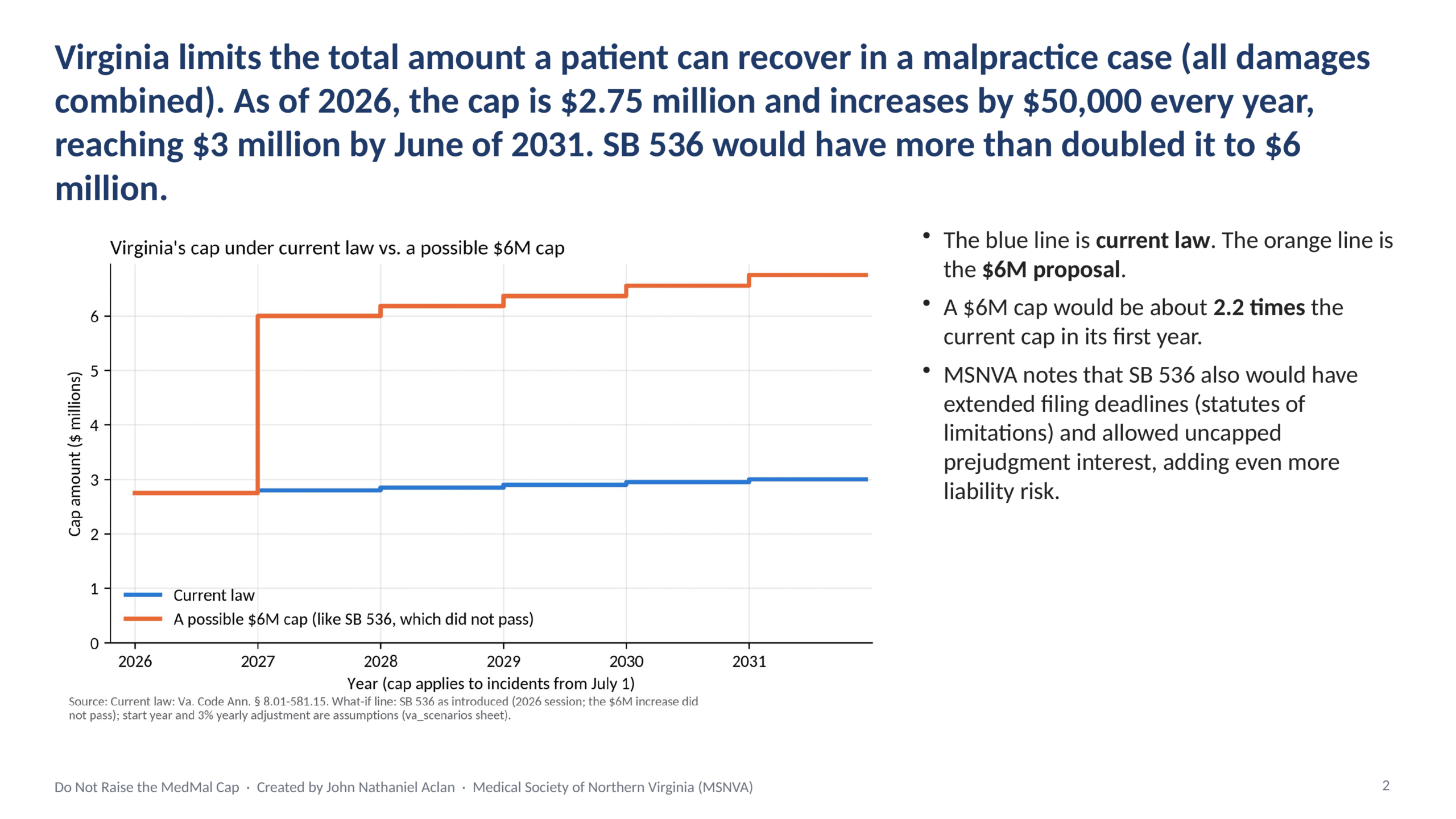
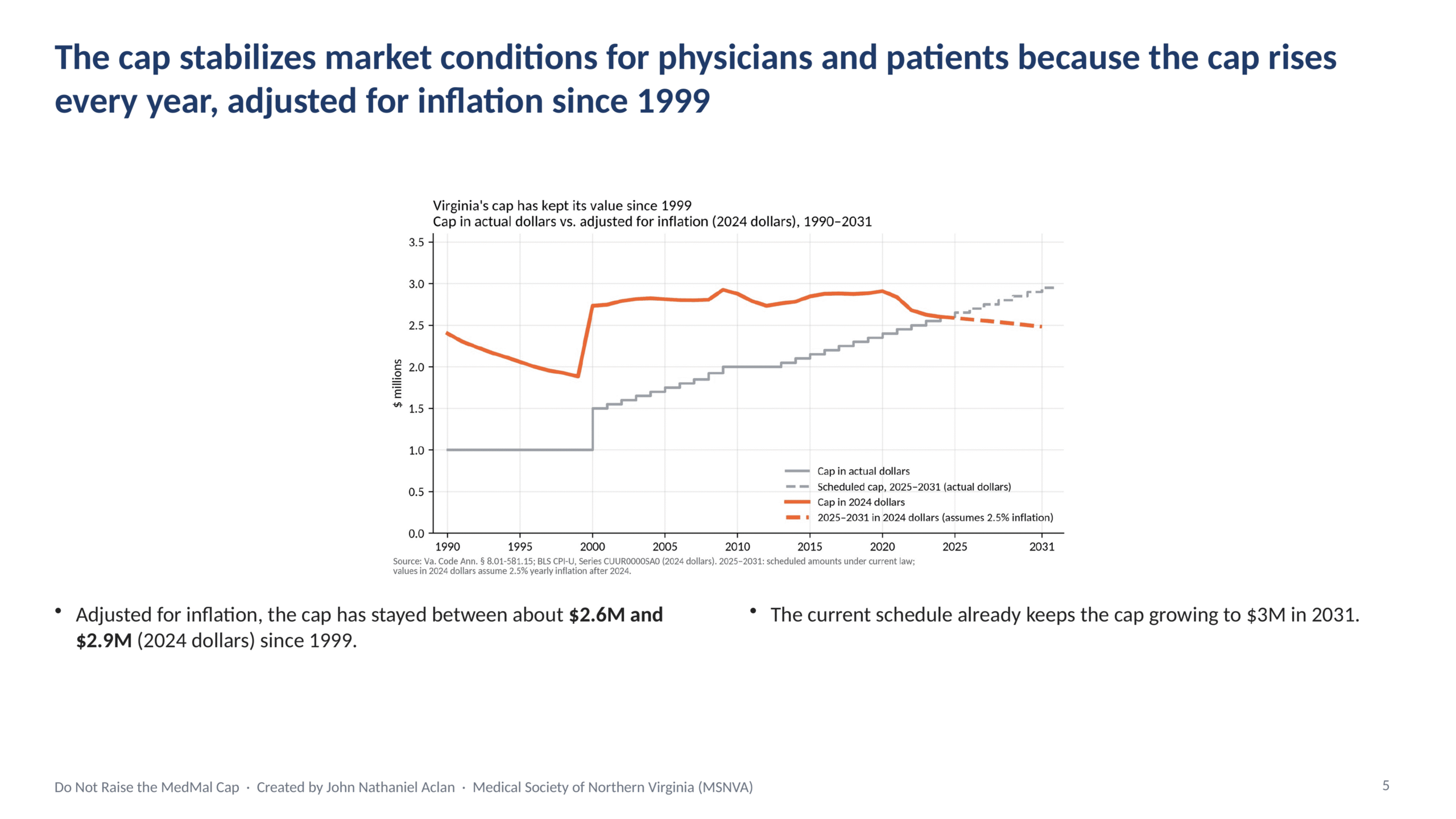
Currently, the cap is at $2.75M and increases by $50,000/year until it reaches $3M in June of 2031
II.
Review Virginia’s Data First
Insurers must now report premiums, claims and payouts every year (Va. Code § 8.01-581.15:1). Lawmakers need to review the results of this data collection before changing the cap.
III.
Use inflation adjusted predictable increases
Use small, predictable increases (such as an inflation adjustment) instead of a sudden jump to $6 million.
IV.
Protect access to care
Protect patients’ access to care, especially in rural and underserved communities that are exacerbated by provider shortages.
An Overview of Damage Cap Categories in the U.S.

Interactive Map: Damage-Cap Regulation and Malpractice Payouts, Compared to Virginia

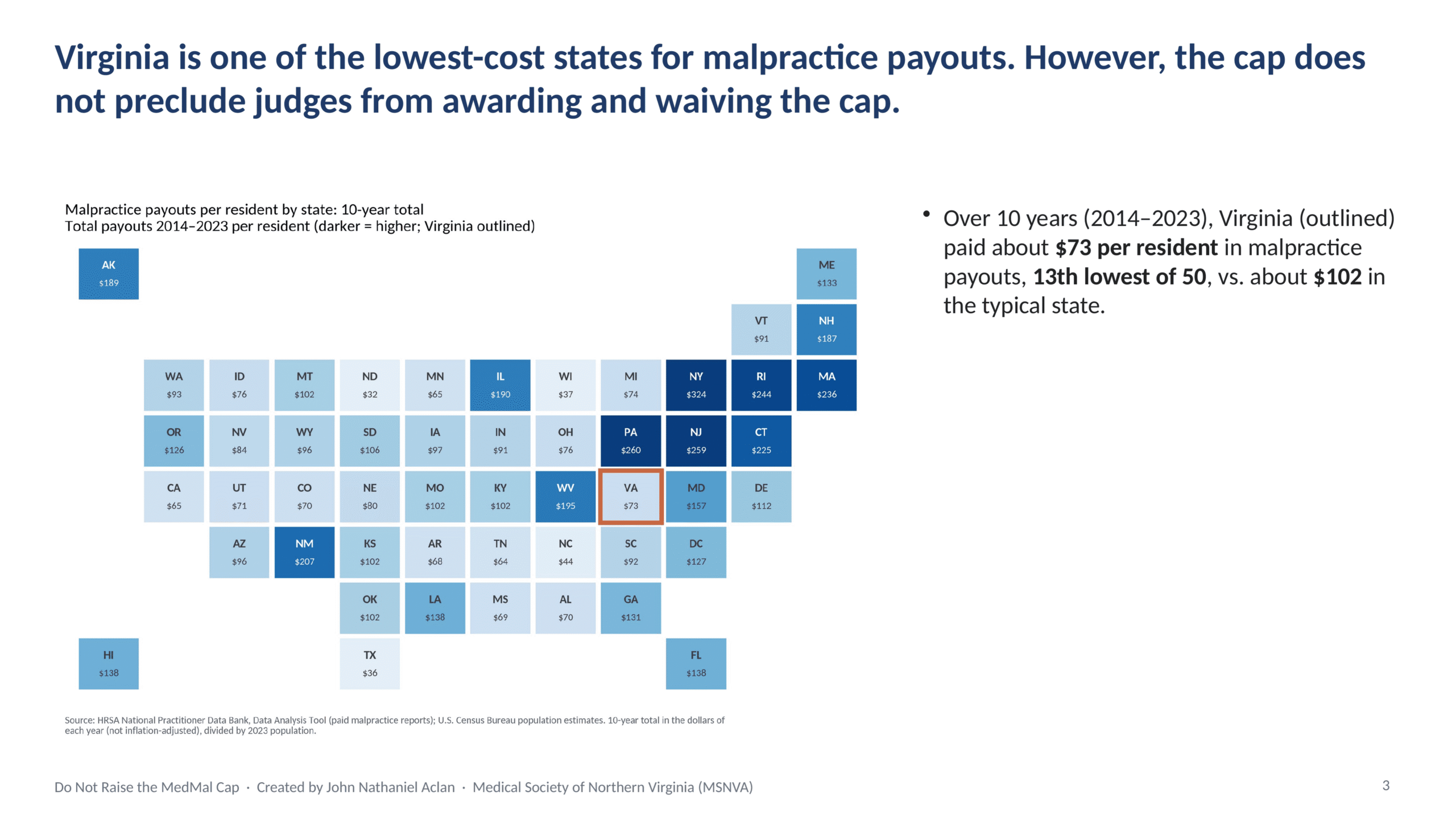
This map shows damage-cap statutes and total medical malpractice payouts per resident by state, based on National Practitioner Data Bank. Each state is colored relative to Virginia ($71 per resident) — blue for lower, orange for higher.
Data Source & Credits: NPDB Data Analysis Tool | Malpractice Insurance Payouts | NCSL Medical Liability/Malpractice Laws
Created by: Jacob Abdeen, Data Analytics Intern, Summer ’26
MSNVA continues to advocate against raising the MedMal cap in Virginia. In preparation for the 2027 General Assembly, MSNVA is building a coalition with other local medical societies from across the Commonwealth. Please continue to add your name to this letter.
At a moment when rising costs, federal funding uncertainty, and workforce shortages are already straining our healthcare system, raising the MedMal cap would impose new financial burdens on physicains that will ultimately reduce — not improve — access to care for the Virginians you represent.
A Dramatic and Unjustified Increase in Liability Exposure
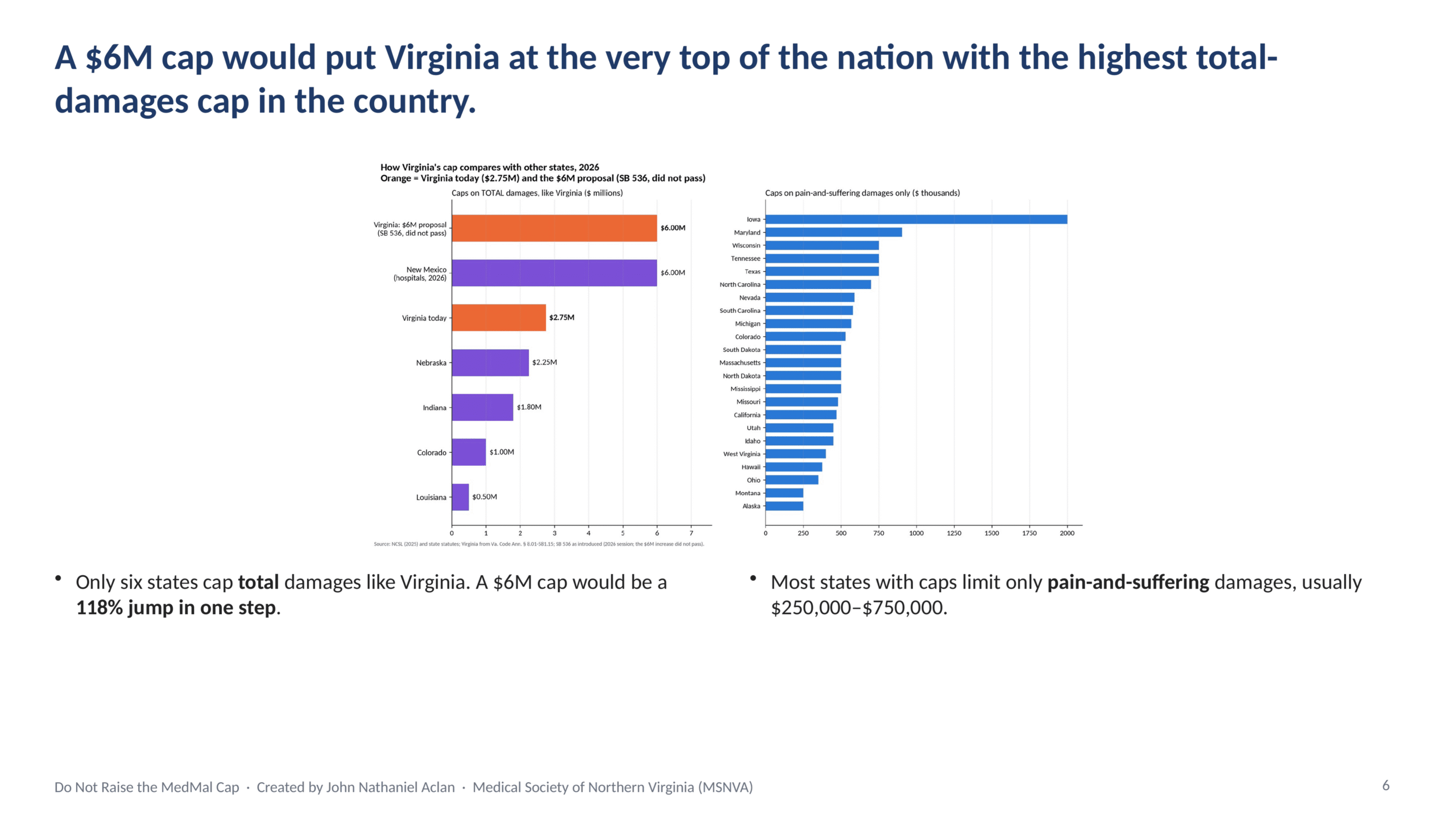
Raising the current medical malpractice damages cap, raising it from $2.7 million to over $6 million — with automatic annual inflation adjustments adding hundreds of thousands of dollars more each year.
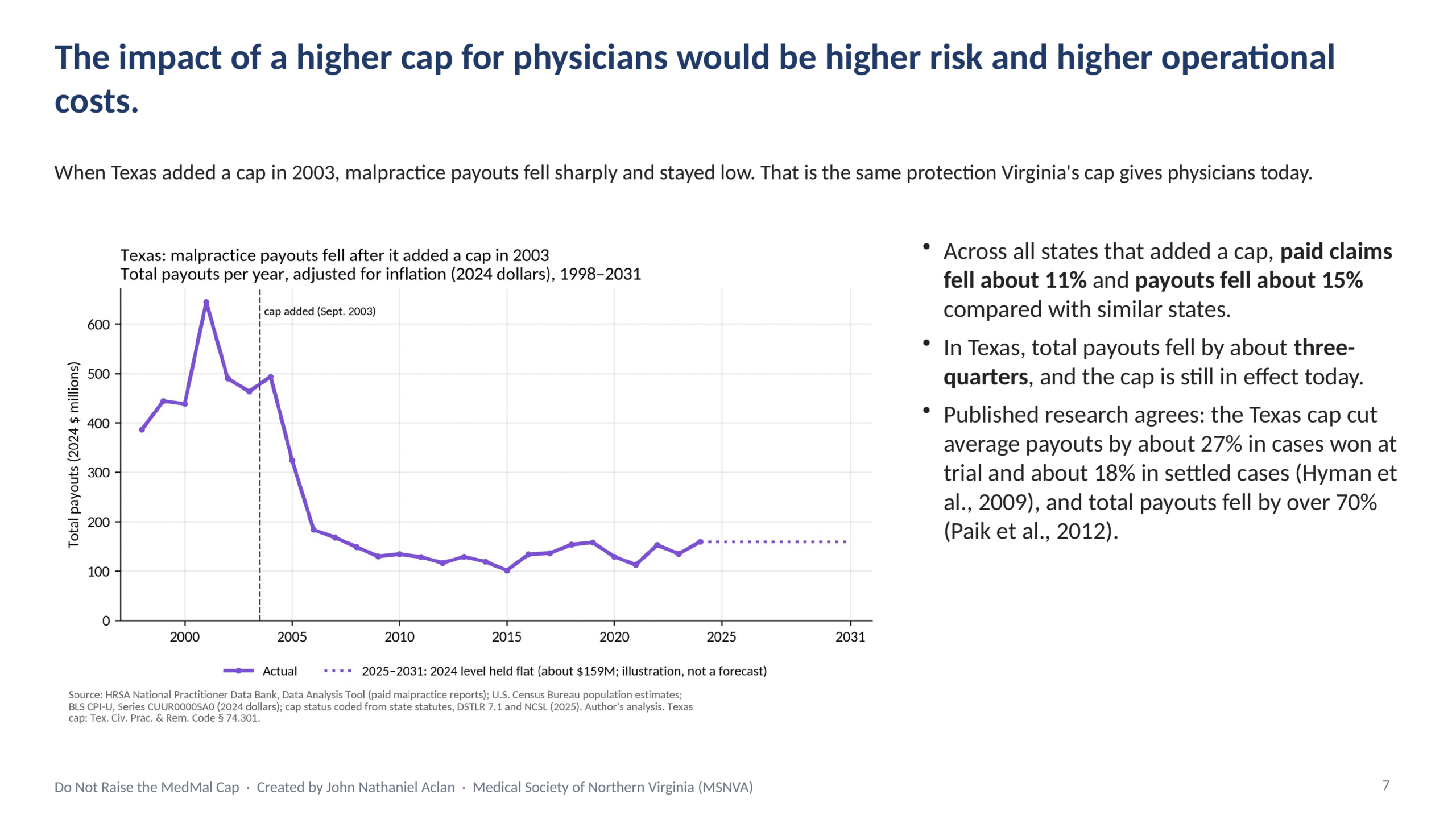
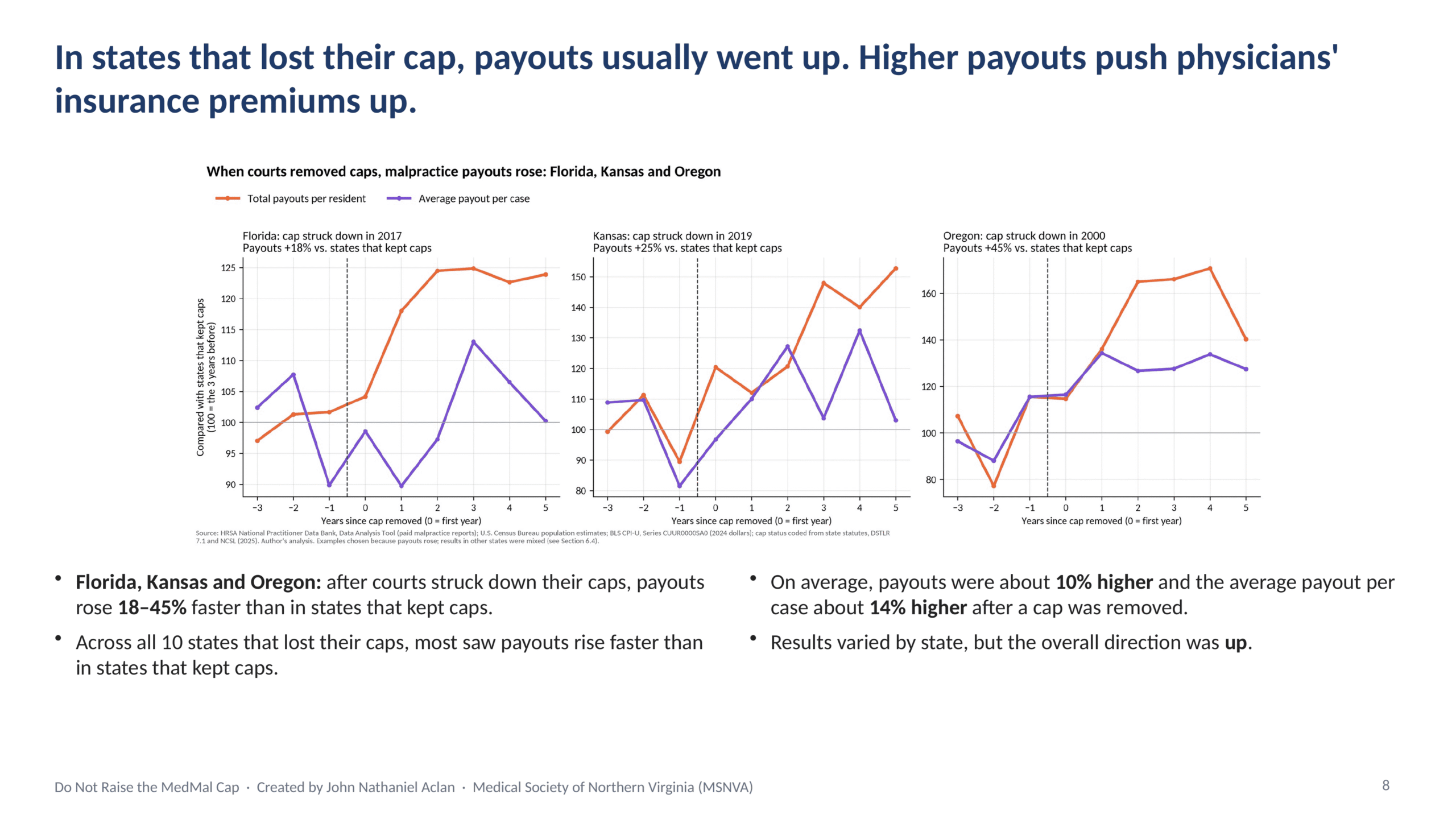
These changes do not simply shift numbers on paper. They translate directly into higher malpractice insurance premiums, reduced coverage availability in certain specialties, and — for providers who cannot absorb those costs — the painful decision to relocate, retire early, or limit the patients and procedures they accept. Virginia’s rural and underserved communities, already facing provider shortages, would be hit hardest.
The Promised Asset Protections Are Illusory
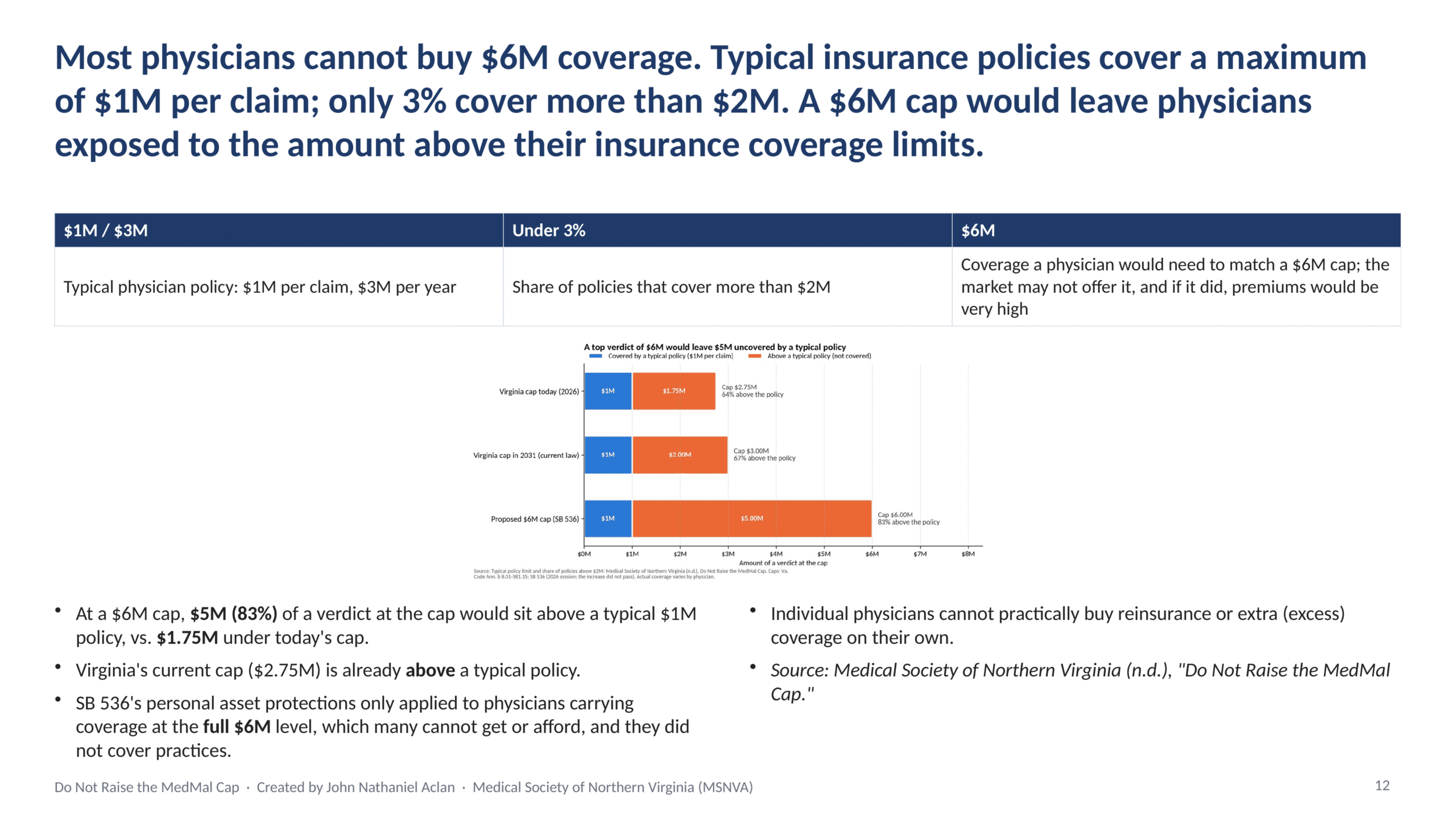
Proponents of SB 536 point to personal asset protection provisions as a safeguard for physicians. In practice, these protections offer little comfort. A provider qualifies for protection only by carrying malpractice coverage at the full $6 million — and rising — cap level. For many practitioners, particularly in high-risk specialties or smaller practices, such coverage is either unavailable in the market or prohibitively expensive. Most physicians carry one million in limits across the country. Moreover, the statutory language governing these protections is so poorly drafted as to render them unenforceable in meaningful circumstances. The protection is a promise that cannot be kept.
The Wrong Legislation at the Wrong Time
Virginia’s healthcare clinicians are already navigating one of the most difficult operating environments in recent memory. Medicaid and Medicare reimbursement rates have not kept pace with inflation. Federal funding instability threatens safety-net clinics and community health centers. Patients who rely on physicians willing to accept government-insured patients, work in underserved areas, or practice in high-risk specialties may no longer have the necessary access.
Advancing SB 536 in this environment is not a reform — it is an accelerant. The increased liability exposure, litigation risk, and insurance costs it creates will push more providers toward the exits at precisely the moment Virginia’s communities need them most. Affordability and access are already among the most pressing healthcare issues facing your constituents. SB 536 worsens both.
Physicians entered medicine to serve patients and to do no harm. We ask that elected officials, members of the General Assembly apply that same principle to any legislation that attempts to raise the MedMel cap. Protect physicians, access to care, and Virginia patients!